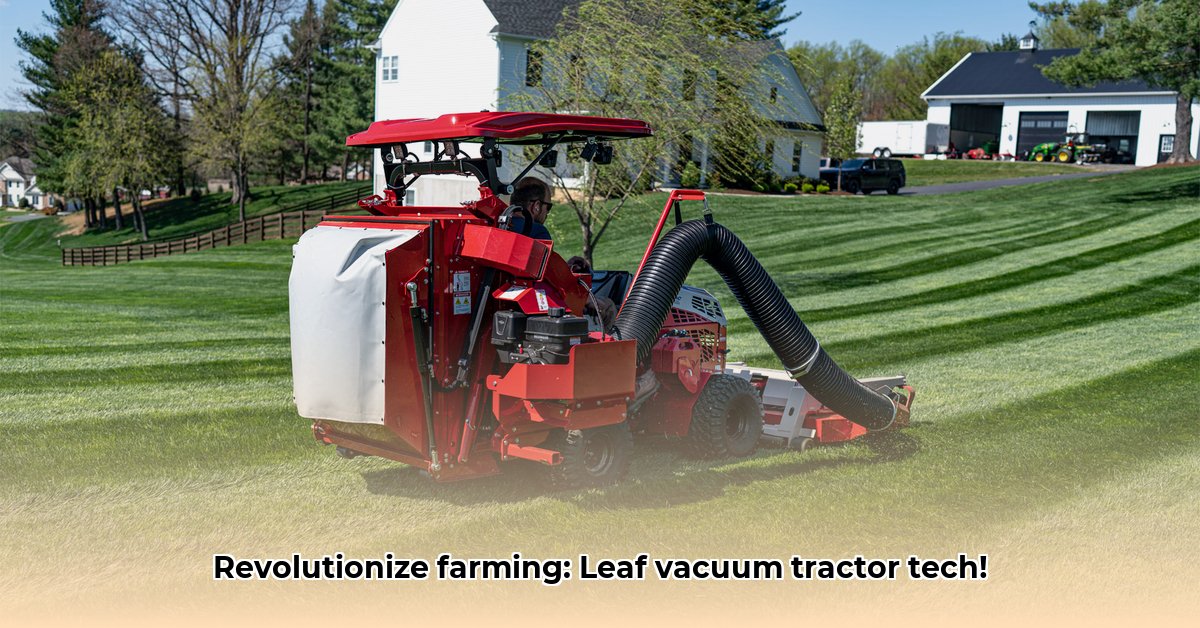
Leaf removal is a significant task in many farming operations, often demanding considerable labor and potentially impacting soil health. Tractor-mounted leaf vacuums offer a sustainable and efficient solution, optimizing processes and contributing to environmentally friendly practices. This article explores the benefits, costs, and considerations for integrating leaf vacuums into your sustainable agricultural strategy. For more information on leaf vacuums, check out this helpful resource: Leaf Vacuum Options.
Types of Tractor Leaf Vacuum Systems
Several types of leaf vacuums cater to different farm sizes and needs. Understanding these distinctions is crucial for making an informed purchase decision.
PTO-driven Vacuums: These are directly powered by your tractor's power take-off (PTO) shaft, providing a reliable and often cost-effective solution. However, they require a tractor equipped with a PTO.
Self-propelled Vacuums: These independent units boast their own engines, offering greater maneuverability and flexibility, especially in complex terrains. However, the initial investment is typically higher.
Attachment Methods: Consider how the vacuum attaches to your tractor. Three-point hitch (rear) and front loader mounts are common, ensuring compatibility with your existing equipment.
Benefits for Sustainable Agriculture: Beyond Cleanliness
Integrating leaf vacuums into your operation offers multiple advantages for sustainable agriculture practices.
Reduced Herbicide Reliance: Efficient leaf removal minimizes the need for herbicides, promoting healthier soil and a more environmentally friendly approach. "The reduction in herbicide use can translate to significant cost savings while reducing the environmental impact of chemical applications," says Dr. Emily Carter, Agricultural Engineer at Cornell University.
Improved Soil Health: The collected leaves can be composted, providing a natural and nutrient-rich soil amendment. This boosts soil fertility, leading to healthier plants and potentially higher yields. "Composting leaf matter returns vital nutrients to the soil, improving its structure and water retention capacity," adds Professor David Miller, Soil Scientist at the University of California, Davis.
Cost Savings: Leaf vacuums significantly reduce labor costs associated with manual leaf removal, freeing up valuable time and resources for other crucial farm tasks. A recent study estimated labor cost savings of up to 75% when using leaf vacuums.
Cost-Benefit Analysis: A Long-Term Perspective
While the initial investment in a leaf vacuum can be substantial, the long-term return on investment (ROI) can be significant. Factors to consider include:
| Factor | Cost Implications | Potential Benefits |
|---|---|---|
| Purchase Price | Ranges widely based on size, features, and brand. | Reduced labor costs, healthier soil, less reliance on herbicides and fertilizers |
| Operating Costs | Fuel consumption, maintenance, and potential repairs. | Improved efficiency, potentially lower overall running costs. |
| Labor Savings | Significant reduction in manual labor. | Increased workforce efficiency, allowing focus on other tasks. |
| Environmental Impact | Reduced chemical use; potential for compost creation. | Positive contribution to sustainable farming practices. |
A thorough analysis comparing the cost of manual leaf removal versus the acquisition and operating costs of a leaf vacuum—including potential yield increases from improved soil health—is crucial before making a purchasing decision.
Environmental Impact: A Holistic Assessment
While leaf vacuums promote sustainable practices by minimizing chemical use, their overall environmental impact requires a comprehensive assessment.
Pros: Reduced herbicide use, improved soil health, potential for compost creation.
Cons: Manufacturing emissions, fuel consumption, noise pollution.
Future research focusing on life-cycle assessments (LCAs) will provide a more detailed understanding of the overall environmental footprint of leaf vacuum technology. This will also improve the ability of farmers to adopt the most sustainable approaches.
Future Trends: Innovations Shaping Sustainable Agriculture
Technological advancements continue to improve leaf vacuum technology:
Electric or Hybrid Models: Reducing reliance on fossil fuels and minimizing emissions.
Smart Sensors: Optimizing operation through real-time leaf density detection for improved efficiency.
Integration with Precision Agriculture: Targeted leaf removal for disease management, allowing for more precise and effective interventions.
Actionable Recommendations: Choosing the Right Vacuum
Selecting the appropriate leaf vacuum involves a methodical approach:
Assess Your Needs: Evaluate farm size, crop type, and current leaf removal methods to determine capacity requirements.
Research Available Models: Compare specifications, features (such as fuel efficiency, noise levels, and maintenance needs), and pricing from different manufacturers.
Obtain Quotes and Consider Demos: Compare quotes from multiple vendors and, if feasible, request demonstrations to assess performance and usability.
Consider Long-Term Costs: Include maintenance, repairs, and fuel costs in your overall financial analysis. Develop a preventative maintenance plan to extend equipment lifespan.
Investing in a leaf vacuum represents a strategic decision in modern, sustainable farming, promising enhanced efficiency, reduced environmental impact, and long-term cost savings. Further research and technological advancements will likely improve the sustainability and efficiency of these machines further.